Monday, April 25, 2011

Wake Up, America! You’re Falling Behind!!

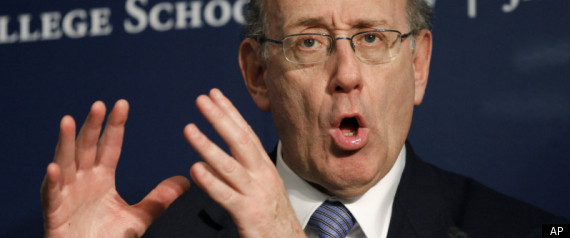
Note: The following is an edited portion of an interview with Kishore Mahbubani, the Dean of the Lee Kuan Yew School of Public Policy at the National University of Singapore. Mahbubani previously served for 33 years in Singapore’s diplomatic service and is the author of The New Asian Hemisphere, Can Asians Think? and Beyond the Age of Innocence.

Every time the United States or the West steps into an Islamic country it presents a major geopolitical gift to China. (When the U.S. decided to intervene in Libya) China was saying, “Great, go ahead! Go into more Islamic countries. Make my day.”

If you’re a logical, long-term, hard-headed geopolitical realist thinker from America it is very, very clear that the only country that can overtake the United States in absolute power - militarily, economically, in every sense - is China.

The Islamic world will not overtake America– not in my lifetime and not in your lifetime.  So America should be devoting 90% of its resources on managing China and 10% of its resources on managing the Islamic world.

Instead it is spending 90% of its resources getting involved in the Islamic world - whether it is Iraq or Afghanistan or Palestine or Libya– and 10% of its time managing China.

The U.S.should engage China more seriously and try to work out a long-term, viable, geopolitical partnership with China.  It should also give up its dream of achieving democracy in China.  It should stop believing that a “Jasmine Revolution” is on the way and realize that this government in China is going to survive and possibly do very well.

You may wish for all kinds of worst-case scenarios for China, but as a geopolitical planner you should plan for the best-case scenario.

China is going to go from strength to strength. And if China is going to go from strength to strength and you spend all your time either in the Islamic world or having this absolutely stupid domestic debate about how to cut the deficit, you’re just buying time for China.

A lot of my writings are intended to serve as a wake-up call to the West. I’m not anti-West nor am I anti-American - even though many people think I am. I’m actually just telling the West that you are acting against your own long-term geopolitical and economic interests in your policies towards the rest of the world. There was a time - and it lasted only 200 years - when the West could make decisions and the rest of the world had to comply. That era is gone, finished – poof!

Now the West has got to learn to understand what the rest of the world wants and pragmatically adjust. The biggest advantage that Asian countries have over the United States and other Western countries is that they’re very pragmatic and flexible and America has become ideological and dogmatic. America needs to become pragmatic and flexible too.

Unfortunately, American public intellectuals have an incestuous, self-referential discourse among themselves saying, “Aren't we the greatest in the world? Gee, aren't we wonderful?” And they don’t realize that Western power - American power - is receding steadily in the world.

Look at Southeast Asia.  After the U.S.won the Cold War, (Southeast Asia) was frankly an American lake. And then suddenly Americans became very arrogant and they said, “Hey, we don’t need the world; forget you.”

You do what you want to do and slowly, steadily,China is (advancing). I admire what the Chinese have done. It’s amazing how careful, deliberate, and systematic they are in their policies towards the rest of the world and how arrogant and ignorant American policies are.

If you want to learn about how to grow a country’s economy right, don’t go to Europe, don’t go to America; go to Asia.  Frankly, the best governed country in the world - and I can say this somewhat immodestly - is Singapore. Or even go to China.

Let me give you a very simple example. The most shocking thing I’ve learned recently for someone who lived in New York for 10 and a half years is that the Tappan Zee Bridge which carries thousands of cars can only survive another 10 years. Isn't that shocking? In the meantime, while you can't hold up one bridge across one river, guess what,China is building the world’s fastest trains and the world’s best airports.

I’ve flown several times, just by chance, directly from Shanghai to JFK (airport in New York). And when you fly from Shanghai airport to JFK, you’re flying from the first world to the third world. And yet Americans are not aware of how far they’ve fallen behind. The Americans cannot conceive of the idea that you can learn about governance from the rest of the world. Chinacan and Chinadoes. China spends so much time studying best practices in the rest of the world and America spends no time studying best practices in the rest of the world.

So my message to America is that the clock is ticking. Time is no more on your side. And fortunately even today there’s a huge reservoir of goodwill towards America in the world.  Try to figure out how you can use this reservoir of goodwill for the long-term benefit of America. Don’t waste it.

Thursday, April 21, 2011

Stingy Megabanks Swimming in Cash and Loaning Less Than Ever

After receiving billions in TARP money from YOU, these crooked megabanks now have enough "F**k You Money" to show Americans how they really feel. If Congress would have bailed out the public, the bankers would not have needed the bailout. And taxpayers would have been the ones telling the banks, F**K U!
Wake Up America! You are being SCREWED!!

If the megabanks are so big on lending, why do their loan books keep shrinking?

The biggest U.S. banks tell us they have spent the past quarter writing loans, renewing credit lines and generally being upstanding economic citizens. Bank of America (BAC) says it provided consumers and businesses with $144 billion in credit in the first quarter, Wells Fargo (WFC) ponied up $151 billion and JPMorgan Chase (JPM), swinging for the PR fences, claims to have lent out an improbable-looking $450 billion.

Yet loan balances actually shrank from a year ago at all three banks in the first quarter, just as they did at their old pal Citi (C). This at a time when the too-big-to-fail four are being drenched with new deposits (see chart).

All told, average loans outstanding at  the fearsome four dropped 7% from a year earlier – a decline of $210 billion -- even as deposits rose 5%.

If this is what the bailed-out captains of the financial sector call supporting the recovery, no wonder the economy is going nowhere fast.

The banks, of course, protest that there are good reasons that their loan balances are dropping even as they wrap themselves in the flag of credit extension.

Good customers aren't exactly banging down the door demanding loans, they say, and won't till the recovery really gets rolling. And making loans for the sake of it doesn't pay off, as we may have learned during the financial meltdown.

"We got to where we are today by making good loans and making sound credit decisions," Wells Fargo's chief financial officer, Tim Sloan, said in an interview Wednesday.

And yes, even with all that shrinkage there are pockets of loan growth at the banks. JPMorgan Chase says loans to midsize companies rose every month last year, and Wells points to strength in auto dealer and commercial lending, along with the oft-questioned commercial real estate sector. 

"We love that business," says Sloan.

But mostly, loans are shrinking. That's partly because banks must put the worst mistakes of the bubble era in the rearview mirror, by taking losses on bad loans and letting other low-quality portfolios run off. Both those moves lead to lower loans outstanding.

All four banks are taking their lumps on that front. BofA is running off loans from the beyond-lax Angelo Mozilo era at Countrywide, JPMorgan is dealing with the sales-at-any-cost (see a shining example, below right) mindset of Kerry Killinger & Co. at Washington Mutual, and Wells Fargo is trying to rid itself of the worst Pick-a-Pay dross it picked up in its acquisition of Wachovia. Citi, of course, has its own issues.


Still, it's clear the banks are not lending quite as freely as their press release claims would have you believe. And the declines are all the more striking because they come when the banks, like their perk-addicted CEOs, are swimming in cash.

Average deposits at the four biggest banks rose by $154 billion over the past year, with Bank of America breaking $1 trillion in deposits for the first time and JPMorgan falling just $4 billion short of that mark.

As a result, all the big banks now have at least $1.06 in deposits for every dollar in loans outstanding. At this time a year ago, only JPMorgan was above $1 in deposits for each dollar in loans.

There is something to be said for banks having a lot of cash on hand, of course. As everyone but Dick Fuld learned from the crisis, running out of money makes it hard to persuade others of your firm's franchise value. And of course it is hard to grow a business without reaching out to new users.

"We are glad to have a highly liquid balance sheet," says Sloan. "Deposit growth gives us a chance to bring in new customers and cross-sell our products."

Given the banks' penchant for cooking up rosy-looking credit creation numbers at a time when their loan books are actually shrinking, maybe those products should come with a grain of salt.

Tuesday, April 12, 2011

Bofa CEO: Owners Shouldn't Look At Home As An Asset

The CEO of Bank of America, one of the banks culpable for the housing bust, now tells Americans that their homes are not worthy of being considered an asset, but rather a "...great place to live."

Wake Up America!! 
You CAN do something about this mess you're in if you will only take hold of your rights and exercise them. Vote out the villainous traitors who allow these bankers free reign to destroy our economy!
  
Homeowners may need to look elsewhere for long-term investment returns as housing prices in some areas may not rebound long-term, Bank of America Corp Chief Executive Officer Brian Moynihan said on Tuesday.

Moynihan, CEO of the largest U.S. bank, said at a state attorneys general summit that low population growth in some regions of the country indicated that prices might not rise in the wake of the worst financial crisis since the Great Depression.

"It's sobering to think, but some people shouldn't be thinking of (their home) as an asset," Moynihan said at the 2011 National Association of Attorneys General conference. "They should be thinking of it as a great place to live."

Moynihan said the long-term average annual rise in post-war U.S. home prices of 4 percent owed much to the explosion in domestic population and, in more recent times, the relaxation of credit standards across the mortgage industry.


"The reality is that the population is not expected to grow the way it did post World War I and World War II," he said.


Moynihan noted an Ohio customers' complaint that his 100-year-old home was valued at $50,000. The home, Moynihan said, would be valued as "some multiples of that figure" if it were located elsewhere, but stagnant population levels in the state are driving demand and home prices lower.


The conference included many of the state attorneys general currently engaged in negotiations with BofA and other lenders about a broad settlement to allegations that the industry cut corners on foreclosures.


Moynihan said during his prepared remarks that he had spoken with the attorneys general about industry issues, but declined to comment further about the discussions.

Monday, April 11, 2011

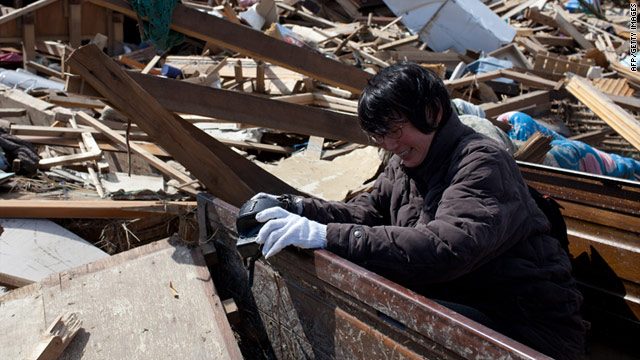
Japanese Citizens Turning In Cash Found In Tsunami Zone

Does this scenario seem a little surreal to those of you living here in the US? We think so. 
Remember Katrina and the widespread looting? Hell..even a few cops there were caught on video looting a Wal-Mart. 
 How many victim's wallets (with the cash left inside) do you think were turned over to police stations in NOLA? 


A tsunami that followed a massive earthquake last month may have destroyed some of Japan's structures, but police say the honest practice of turning in lost items, especially cash, remains intact.

Residents have turned in lost cash across the tsunami zone at a much higher rate than usual, the Miyagi Prefectural Police Department tells CNN.

A police spokesman, who asked not to be identified, citing department policy, said he could not specify how much cash has been turned in to lost-and-found offices at police stations. But, he said, of the 24 police stations across Miyagi Prefecture, nine of them are on the Pacific coastline.

Between March 12, the day following the earthquake and tsunami, and March 31, those nine police stations collected 10 times the amount of lost cash collected at the other 15 stations combined.

Japanese children, from a young age, are taught to turn in any lost items, including cash, to police stations. The cultural practice of returning lost items and never keeping what belongs to a stranger has meant police departments like Tokyo's Metropolitan have an entire warehouse filled with lost shoes, umbrellas and wallets.

In the tsunami zone, where personal items lie amid miles of rubble, it's meant that lost valuables have often gone directly to police, rather than the pocket of the finder.

The lost cash hasn't been easy to handle, the Miyagi Prefectural Police Department says. Money found along with some identification is being returned, but officers have been able to return only 10% of the cash.

Cash that wasn't in a wallet is left unclaimed at the police station. After three months, the person who turned in the cash is able to collect that lost money. But police say people are already waiving their rights to claim the cash when they turn it in.

Unclaimed cash will eventually be sent to the Miyagi Prefectural Government, though police say they do not know how it will be used.

Also found: Hundreds of safes that can't be opened. If the prefectural government allocates funding for opening the safes, police will start doing so.

Prefectural police believe that these safes could contain not only currency, but bank books, stocks and land deeds, which could give a huge boost to the amount of lost money.

Tuesday, March 29, 2011

Anatomy Of a Failing Presidency

This article was by written Geoffrey Hunt for the American Thinker in late 2009. The message is more ominous now than it was then. 


Barack Obama is on track to have the most spectacularly failed presidency since Woodrow Wilson. In the modern era, we've seen several failed presidencies--led by Jimmy Carter and LBJ. Failed presidents have one strong common trait-- they are repudiated, in the vernacular, spat out. Of course, LBJ wisely took the exit ramp early, avoiding a shove into oncoming traffic by his own party. Richard Nixon indeed resigned in disgrace, yet his reputation as a statesman has been partially restored by his triumphant overture to China 20.

But, Barack Obama is failing. Failing big. Failing fast. And failing everywhere: foreign policy, domestic initiatives, and most importantly, in forging connections with the American people. The incomparable Dorothy Rabinowitz in the Wall Street Journal put her finger on it: He is failing because he has no understanding of the American people, and may indeed loathe them. Fred Barnes of the Weekly Standard says he is failing because he has lost control of his message, and is overexposed. Clarice Feldman of American Thinker produced a dispositive commentary showing that Obama is failing because fundamentally he is neither smart nor articulate; his intellectual dishonesty is conspicuous by its audacity and lack of shame.

But, there is something more seriously wrong: How could a new president riding in on a wave of unprecedented promise and goodwill have forfeited his tenure and become a lame duck in six months? His poll ratings are in free fall. In generic balloting, the Republicans have now seized a five point advantage. This truly is unbelievable. What's going on?

No narrative. Obama doesn't have a narrative. No, not a narrative about himself. He has a self-narrative, much of it fabricated, cleverly disguised or written by someone else. But this self-narrative is isolated and doesn't connect with us. He doesn't have an American narrative that draws upon the rest of us. All successful presidents have a narrative about the American character that intersects with their own where they display a command of history and reveal an authenticity at the core of their personality that resonates in a positive endearing way with the majority of Americans. We admire those presidents whose narratives not only touch our own, but who seem stronger, wiser, and smarter than we are. 
Presidents we admire are aspirational peers, even those whose politics don't align exactly with our own: Teddy Roosevelt, FDR, Harry Truman, Ike, and Reagan.

But not this president. It's not so much that he's a phony, knows nothing about economics, and is historically illiterate and woefully small minded for the size of the task--all contributory of course. It's that he's not one of us. And whatever he is, his profile is fuzzy and devoid of content, like a cardboard cutout made from delaminated corrugated paper. Moreover, he doesn't command our respect and is unable to appeal to our own common sense. His notions of right and wrong are repugnant and how things work just don't add up. They are not existential. His descriptions of the world we live in don't make sense and don't correspond with our experience.

In the meantime, while we've been struggling to take a measurement of this man, he's dissed just about every one of us--financiers, energy producers, banks, insurance executives, police officers, doctors, nurses, hospital administrators, post office workers, and anybody else who has a non-green job. Expect Obama to lament at his last press conference in 2012: "For those of you I offended, I apologize. For those of you who were not offended, you just didn't give me enough time; if only I'd had a second term, I could have offended you too."

Mercifully, the Founders at the Constitutional Convention in 1787 devised a useful remedy for such a desperate state--staggered terms for both houses of the legislature and the executive. An equally abominable Congress can get voted out next year. With a new Congress, there's always hope of legislative gridlock until we vote for president again two short years after that.

Yes, small presidents do fail, Barack Obama among them. The coyotes howl but the wagon train keeps rolling along.
Margaret Thatcher: "The trouble with Socialism is, sooner or later you run out of other people's money."

"When you subsidize poverty and failure, you get more of both." - James Dale Davidson, National Taxpayers Union

"The more corrupt the state, the more it legislates." - Tacitus

"A Liberal is a person who will give away everything he doesn't own." - Unknown

Dr. Geoffrey P. Hunt is a social and cultural anthropologist.  He has had nearly 30 years experience in planning, conducting, and managing research in the field of youth studies, and drug and alcohol research.  Currently Dr. Hunt is a Senior Research Scientist at the Institute for Scientific Analysis and the Principal Investigator on three National Institutes of Health projects.  He is also a writer for American Thinker.

Sunday, March 27, 2011

BP Increases Pay For Claims Czar Ken Feinberg's Law Firm To $1.25 Million Per Month

Talk about the fox looking after the hen house! Kenneth Feinberg, Obama's "Claims Czar" for the BP oil spill disaster, is being paid by...you guessed it. BP! WTF??!!
The "Czar" is doing such a good job saving BP billions of bucks by stiffing claimants he is getting a raise. 
Good job Hussein... You have screwed the taxpayer once again.
Wake Up America!


Documents provided by the administrator of BP's claims fund for Gulf oil spill victims show the oil giant agreed to increase his law firm's monthly compensation from $850,000 to $1.25 million.

The documents furnished Friday to The Associated Press include a letter from former U.S. Attorney General Michael Mukasey to claims czar Kenneth Feinberg. Mukasey stated his belief that the extra money was warranted because Feinberg's duties had grown. Mukasey was asked by Feinberg to weigh in on how reasonable his compensation was.

The pay hike, detailed in a Tuesday letter from Mukasey to Feinberg, is retroactive to Jan. 15 and runs through the end of 2011.

Feinberg has been criticized for the pace of processing the roughly 500,000 claims that have been filed since he took over handling claims for individuals and businesses from the $20 billion fund in August. Fishermen and others have complained that the money they have received is inadequate, and that in many cases their claims have been denied with little explanation.

An AP review published in February that included interviews with legal experts, government officials and more than 300 Gulf residents found a process beset by red tape and delay. At its center is a fund administrator whose ties to BP have raised questions about his independence.

Under Feinberg's plan for making final payments to victims, claimants would receive twice their documented 2010 losses. Oyster harvesters and oyster processors would be offered four times their losses.

The White House and BP appointed Feinberg last June to oversee payments from the fund to individuals and businesses. Since Feinberg took over the payment process, some $3.6 billion has been paid out to 172,000 claimants. Besides payments to individuals and businesses, the fund also can be used to pay for environmental damages and state and local response costs. Feinberg is not in charge of those payments.

Feinberg has said he believes the Gulf of Mexico should largely recover from BP's oil spill by the end of next year, and he doesn't think the entire $20 billion will be needed to compensate victims. Only half of that should suffice, he has said.

"He has performed poorly, and I'm being polite, and yet they are giving him a raise," said Orange Beach, Ala., Mayor Anthony Kennon, whose community was hard hit by the oil spill. "The real question is, how does BP view his performance? They are giving him a raise, so they must think it's good. That speaks for itself."

Wednesday, March 23, 2011

Vicente Fox: "Mexico at War". Obama's Approach a Failure. What's New??

Former Mexican President Vicente Fox says his nation is at "war" with drug cartels, and he offered sharp criticism of the Obama administration for failing to assist its beleaguered neighbor.

In an exclusive interview with Newsmax TV on Tuesday, Fox said President Barack Obama's administration has failed to grapple with the deteriorating situation in Mexico.


“Obama is thoroughly mixed up with all these things he’s got," Fox said, adding: "He’s got to solve Libya. He’s got to solve Afghanistan. He’s everywhere. And this nation, I don’t know why it’s not showing the leadership and capacity to attend different issues at the same time.”


Asked if Mexico was entangled in a civil war involving the drug cartels, Fox responded: “We’re undergoing a war, no doubt — 35,000, maybe 40,000 people killed, either members of the cartels or members of the police force or members of the army. So yes, we’re undergoing a war, no doubt.

“Everybody’s trying to deny that we’re going through a war, but that’s what it is. That’s why we have to move to a new paradigm."


Recently, Fox has called for legalizing and decriminalizing drugs in the United States to throttle the demand for narcotics, which he argues is the root cause of his country's civil unrest.


"The United States has to think very profoundly how it is going to solve this problem of excess in the consumption of drugs, excess in building a market that is very profitable to the criminals," he said.


He continued: “I think the best move is to take away the business from criminals and put it in the hands of businessmen and producers, farmers, distributors.”


He compared the situation with illegal drugs to Prohibition in the United States, which enriched mobsters who provided alcohol just as the drug trade is now enriching the cartels.


“We are never going to eradicate drugs,” he added. “They will always be there. It is a free choice” to consume them.


Fox, who served as president from 2000 to 2006, also took aim at his successor, Felipe Calderon, who has enlisted the army in the fight against drug traffickers in Mexico.


“And this decision that President Calderon took, to bring in the army in trying to control drug trafficking cartels, I don’t think is the right measure. It has created violations to human rights and additional problems," he said.


“I think there are much better alternatives than that one. The army should go back to their assigned duties, and police should take the responsibility of fighting the cartels."


Fox was also critical of both the wall at the U.S.-Mexico border and the Arizona law aimed at curtailing illegal immigration.


He stressed that he is “absolutely not” calling for an open border, but rather for the “wisdom and leadership" of this nation.


“There is [an immigration reform] bill in Congress, prepared by Senator Kennedy, Senator McCain, a bipartisan initiative, and it’s been sitting there for years, seven years, eight years. I discussed with President Bush a strategy for an integrated immigration reform. And it’s been sitting there without any solution.


“So if Arizona sees the federal government isn’t assuming its responsibilities, it creates local laws. But migration and keeping security on the borders is not a local or state issue, it’s a federal issue."


As for Obama's role in immigration reform, Fox said he “has not attended to it. It was a campaign promise he’s not even trying to do it.”


Fox is visiting the United States as part of an effort to promote the construction of the Vicente Fox Center of Studies, Library and Museum near his ranch in Guanajuato, Mexico, which he says is the world’s first presidential library outside the United States.